Survival Guide: The 10 Essential Culture Shocks Every New Japan Resident Must Know

Japan is a fascinating country to visit, offering a blend of ancient traditions and cutting-edge technology. But moving here? That’s a different game entirely.
When you transition from tourist to resident, the subtle, complex layers of Japanese society start to reveal themselves. Suddenly, you’re not just admiring the efficiency—you’re navigating its bureaucratic maze. You’re not just enjoying the cleanliness—you’re wrestling with the strict rules that maintain it.
This guide dives deep into the 10 essential culture shocks that go beyond the typical travel advice. These are the things you need to know to truly survive and thrive as a new resident in Japan.
Shock 1: The Labyrinth of Waste Separation (Gomi)
If you thought sorting your recycling was complicated before, prepare to enter the Gomi (trash) matrix.
In Japan, waste separation is less a suggestion and more a civic duty enforced with strict precision. You will likely receive a thick, detailed calendar specific to your neighborhood.
- Burnable (Moeru-gomi): Must be in specific, often clear or semi-transparent, bags.
- Non-Burnable (Moenai-gomi): Different days, different bags.
- Plastics (Purasuchikku): Often a separate collection day, and they must be rinsed clean.
- Oversized Waste (Sodai-gomi): You can’t just throw out a broken chair. You must call a service, purchase a specific sticker from the convenience store, and place it out on a reserved day.
The Resident Reality: Put the wrong trash out on the wrong day, or fail to clean your plastic, and your bag will likely be left behind with a warning sticker. Continuous violation can lead to direct community intervention. Learn the rules for your area immediately.
Shock 2: Everything is Cash (Still!)
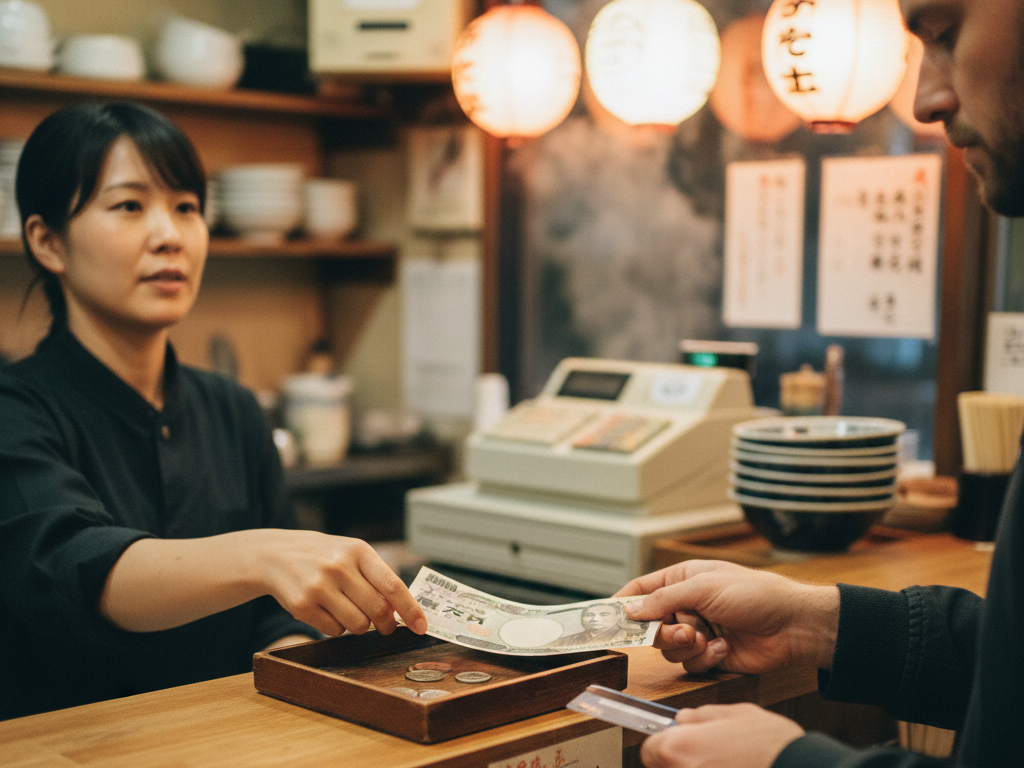
Despite being a technological superpower, Japan remains stubbornly dependent on cash, particularly for residents.
While large department stores and major chains accept cards, many essential parts of your daily life—especially when you first arrive—rely on paper money:
- Small Restaurants and Cafés: Nomihodai (all-you-can-drink) bars, ramen shops, and older eateries often only accept cash.
- Small Shops and Services: Local laundromats, traditional bathhouses (sento), and tiny neighborhood grocery stores.
- The Bureaucracy: Many important administrative fees, taxes, and payments at local ward or city offices require cash.
- The ATM Hunt: Finding an ATM that accepts your foreign debit card (or even just an ATM outside of bank hours) can be a challenge. Look for 7-Eleven (Seven Bank) or Japan Post Bank ATMs.
Shock 3: The Sounds of Silence (Noise/Manners)
The level of public quietness in Japan is often astonishing to newcomers. This is especially true on trains and within apartment complexes.
- Public Transit: Loud phone calls are universally considered rude. Keep your phone on silent (or “manner mode”) and avoid prolonged conversations. Even playing music through headphones too loudly can draw stares.
- Apartment Walls: Japanese apartments, particularly older ones, are often not soundproofed. This creates an invisible, strict noise etiquette. Vacuuming late, doing laundry after 10 PM, or hosting anything but a very quiet gathering can quickly lead to a polite (but firm) note from your landlord or neighbors.
Tip: Be aware of your noise footprint, especially if you live above someone. Walking heavily is often considered a major infraction.
Shock 4: The Paradox of Professionalism (The Service)
Japanese customer service (omotenashi) is legendary, but it can be overwhelming for those not used to it. The standard is perfection, and it’s backed by a high level of employee dedication.
- The Over-Catering: Getting your purchase wrapped in multiple layers of paper and plastic, or being bowed to repeatedly for a simple transaction, can feel excessive.
- The Fear of Complaint: Because the service standard is so high, the rare instances where something goes wrong are treated with intense seriousness, which can feel disproportionate to the issue. Employees are trained to manage high-pressure situations with deference, but this can make direct problem-solving complicated.
Shock 5: The Seal and The Paper Trail (Hanko/Bureaucracy)
Forget wet signatures; your personal identity in Japan is tied to your Hanko (personal seal/stamp).
- Official Necessity: The Hanko is required for signing leases, opening bank accounts, and registering at the city hall (though the system is slowly modernizing, particularly for foreigners).
- The Endless Paper: Moving to Japan involves mountains of paperwork—from your residence card (Zairyu Card) to tax forms. Documents often need to be physically submitted, signed/sealed, and sometimes printed in a specific format from a convenience store.
Be Prepared: Dedicate substantial time for your initial city hall visits and bank account setups. Bring all relevant ID documents and, if required, your Hanko.
Shock 6: The Bathroom Ritual (Toilets/Slippers)
You’re likely familiar with high-tech Japanese toilets, but the ritual surrounding them is the real shock.
- The Toilet Slippers: In many Japanese homes and sometimes in public settings like doctors’ offices or temples, there will be a specific pair of slippers just for the bathroom. This is a crucial line of hygiene separation. Never forget to take them off when you leave the bathroom and put your house slippers back on.
- The Sounds: Many older washrooms have a Sound Princess (Otohime) button that plays flushing or water sounds to mask embarrassing noises—a testament to the high level of concern for privacy and public comfort.
Shock 7: Seasonal Relocation (Moving/Apartment Life)
Renting an apartment in Japan is a complex and often expensive endeavor, far removed from simple month-to-month contracts.
- The Initial Cost Wall: Prepare for a massive upfront payment. This typically includes:
- Shikikin (敷金 / Deposit): 1-2 months’ rent.
- Reikin (礼金 / Key Money): 1-2 months’ rent, paid as a non-refundable gift to the landlord.
- Guarantor Fees: Fees to a guarantee company if you don’t have a personal guarantor.
- Agent Fees: Usually 1 month’s rent.
- Renewal Shock: Contracts are typically 2 years, and you will often have to pay a hefty Renewal Fee (up to a month’s rent) just to stay in your current home.
The Resident Reality: The cost of moving (or staying) is extremely high, making long-term planning essential.
Shock 8: The Power of Hierarchy (Senpai/Kouhai)

Japanese society, especially in the workplace or school, is governed by explicit hierarchies that are constantly expressed through language and behavior.
- Senpai (先輩) / Kouhai (後輩): The established senior/junior relationship is vital. Senpai offer guidance; Kouhai show respect. This isn’t just about age; it’s about tenure in a specific organization.
- Keigo (敬語 / Honorific Language): Mastering Keigo is a lifetime pursuit, but you need to know the basics. Speaking to a manager, client, or even an older stranger requires specific grammatical patterns and vocabulary. Misusing it can be seen as disrespectful, even if you’re a beginner.
Shock 9: The Unexpected Heat and Humidity
You’ve heard of cherry blossoms and snow, but many newcomers are completely unprepared for the grueling reality of Japanese summer.
- The Humidity: The summer is less about high temperatures and more about extreme, suffocating humidity, especially from June to September.
- The Health Risk: Heatstroke (Nesshō) is a serious annual problem. You’ll need to learn how to properly use your air conditioning, carry cooling towels, and stay hydrated at all times.
- Condensation and Mold: The humidity will find its way into your apartment, leading to persistent battles with condensation and mold (Kabi) behind furniture and in closets. This requires regular, proactive cleaning and ventilation.
Shock 10: The Unwritten Rules of the Line (Queuing)
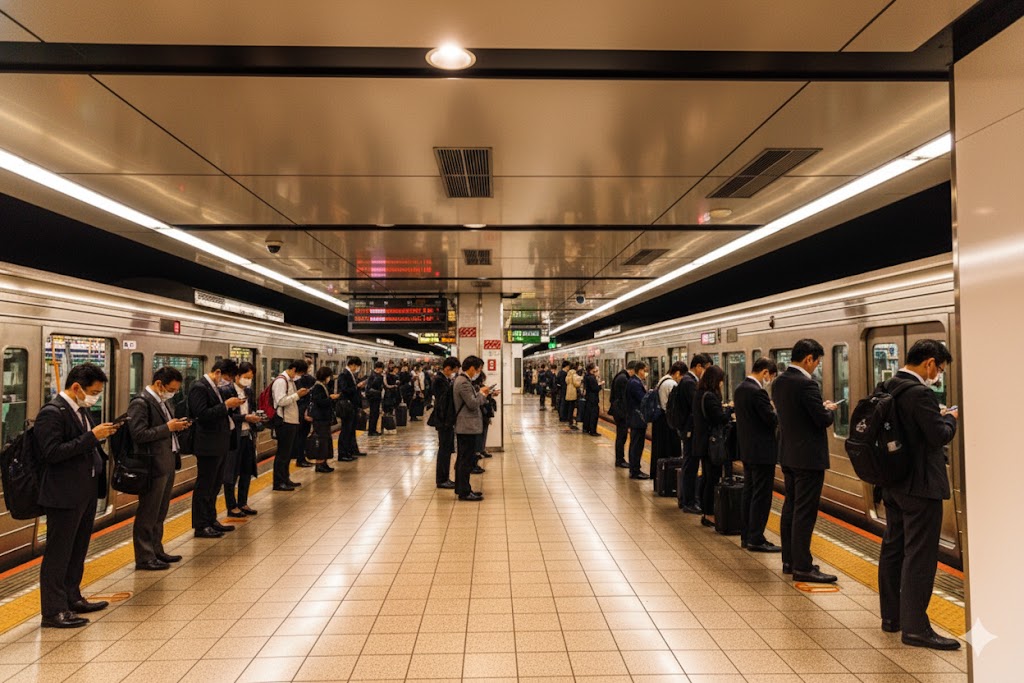
The Japanese approach to forming a line (gyōretsu) is a deeply ingrained cultural practice.
- The Perfect Line: Japanese lines are almost always perfectly organized, single-file, and respected. Cutting in is a grave offense that will likely be met with silence and intense, icy stares.
- The Place Marker: Be mindful of where the line starts. If no one is physically present, look for subtle markers: a bag placed neatly on the ground, or a sign indicating where the end of the line is.
- The Train Platform: Lines form precisely where the train doors will open, ensuring a smooth and efficient boarding process—always wait until others have exited before attempting to enter.
Conclusion
Life in Japan offers incredible rewards, from safety and efficiency to unique cultural experiences. However, achieving stability requires going beyond the surface.
These ten culture shocks are not obstacles to be feared, but invisible rules to be understood and mastered. Once you recognize the logic and purpose behind Japan’s social architecture—whether it’s the need for hyper-cleanliness or the importance of respect for seniority—you’ll be well on your way to turning culture shock into cultural comfort.
Are you ready to dive deeper into the specifics of renting an apartment or navigating the tax system? Let me know!

Lorem ipsum dolor sit amet consectetur a lorem metus diam dictum congue non fames et neque vel massa non in.

Lorem ipsum dolor sit amet consectetur a lorem metus diam dictum congue non fames et neque vel massa non in.