The “Money Code” 2026: Japan’s Highest Paying Programming Languages
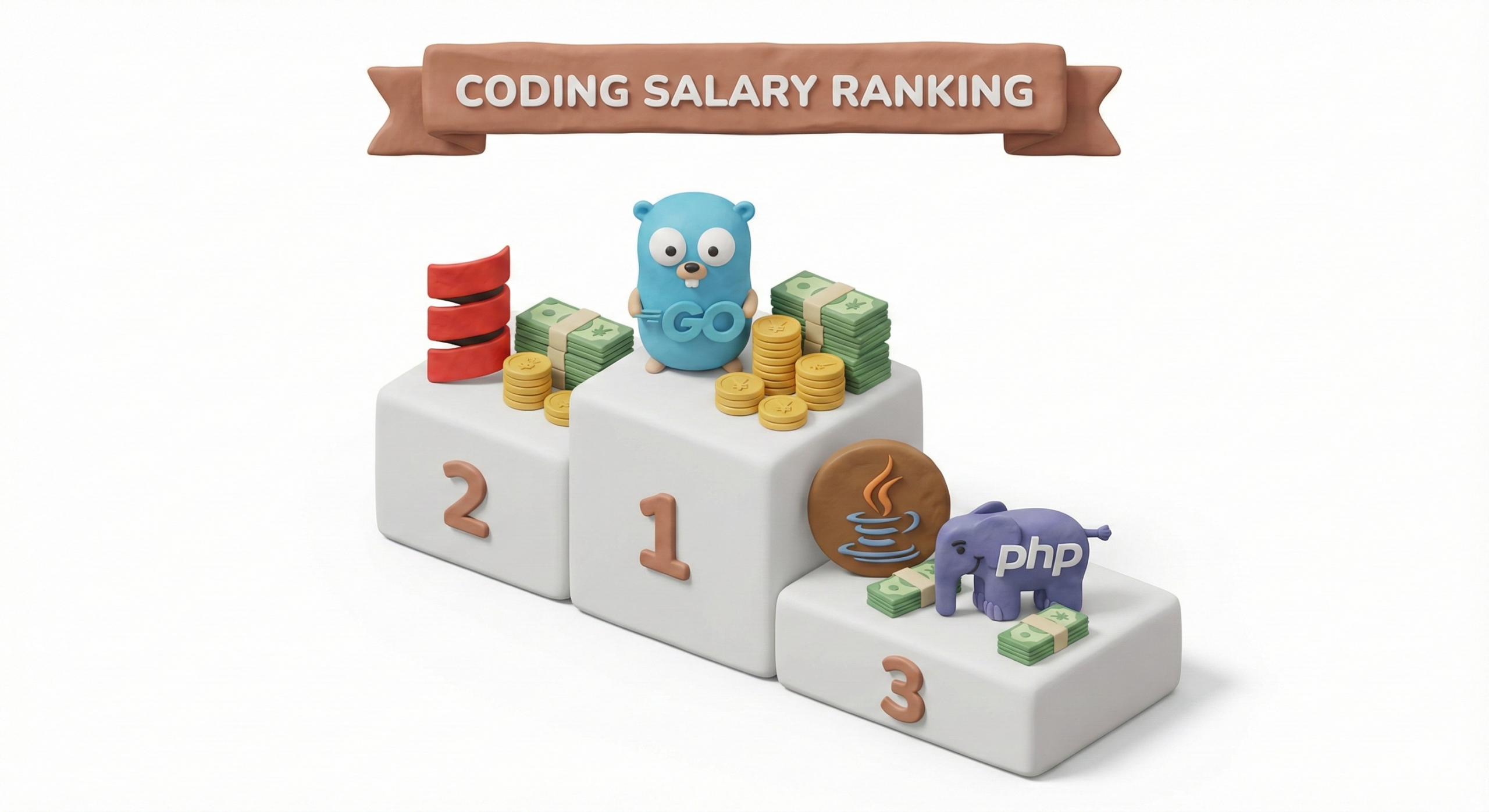
Introduction: The “Tech Stack” Gap
In the Japanese IT market, your salary is not just about how good you are. It is about supply and demand.
According to the latest data from major Japanese recruitment agencies (Levtech, Paiza), there is a clear trend: “Modern & Scarce” languages pay significantly more than “Legacy & Common” ones.
A “Go Engineer” often earns ¥2 Million more per year than a “PHP Engineer” with the same years of experience.
Here is the definitive, data-backed Tier List for 2026.
🏆 Tier S: The “High-Income” Elites (Median: ¥8.5M – ¥12M+)
These languages are used by high-profit modern tech companies and suffer from a severe talent shortage.
🥇 1. Go (Golang)
- The Undisputed King.
- Why it pays: It is the standard for microservices in Japan’s top “Mega-Ventures” (Mercari, SmartNews, CyberAgent). These companies have the highest budget for engineering teams.
- The Stats: Consistently ranks #1 or #2 in annual salary reports.
- Target Companies: Mercari, Sansan, Money Forward, U-Next.
🥈 2. Scala
- The Specialist’s Weapon.
- Why it pays: High learning curve means fewer competitors. It is heavily used in Ad-Tech and large-scale data processing where performance is money.
- The Stats: Often has the highest “median” salary because there are almost no “junior” Scala jobs.
- Target Companies: Chatwork, Septeni, Hatena.
🥉 3. Rust
- The Rising Star.
- Why it pays: Rapidly being adopted for infrastructure, blockchain, and high-performance tooling. Demand is skyrocketing, but supply is tiny.
- The Reality: If you know Rust well in 2026, you can name your price.
🥈 Tier A: The “Modern Standard” (Median: ¥6.5M – ¥9M)
High demand, global standard, and solid pay. Safe bets for a stable career.
🐍 4. Python (Data Science / AI)
- The “AI” Bonus.
- Context Matters:
- Web (Django/Flask): Average pay (Tier B).
- AI/ML/Data: Tier S pay.
- Why it pays: Japan is investing heavily in AI integration. Toyota (Woven Planet) and Preferred Networks pay top-tier salaries for Python experts.
📱 5. Kotlin / Swift (Mobile)
- The “App Economy.”
- Why it pays: Japan is a mobile-first country (iPhone dominance is huge). Good iOS/Android engineers are constantly in short supply.
- The Trend: Freelance rates for mobile developers are particularly high (often ¥800k – ¥1M / month).
🔷 6. TypeScript (React / Next.js)
- The Frontend Standard.
- Why it pays: “jQuery” is dead. Modern companies need complex SPAs. React is the winner in Japan’s global startup scene.
- Warning: The salary gap is huge. Senior React devs earn ¥10M+, while juniors earn ¥4M.
⚠️ Tier B: The “Volume Zone” (Median: ¥4.5M – ¥7M)
Popular, lots of jobs, but risky due to the “Legacy Trap.”
☕ Java
- The Double-Edged Sword.
- Use Case A (Good): Modern Web / Microservices / Android. (Pays well).
- Use Case B (Bad): Legacy SIer (Subcontractors). This is the “Suits & Excel” world.
- Reality: Java has the most jobs in Japan, but many are low-paying contract work. Be careful of the company type.
💎 Ruby (Ruby on Rails)
- The Japanese Standard.
- The Context: Created by a Japanese developer (Matz), Ruby is massive here.
- The Trap: It is the default language for bootcamps. The market is flooded with Junior Ruby Devs, which depresses the entry-level salary. It is great for getting into Japan, but harder to hit ¥10M+ compared to Go.
🐘 PHP
- The “Mixed Bag.”
- The Reality: Like Java, it depends on the framework. Laravel at a product company is good. Legacy PHP at a web agency is often low-paid overworked positions.
📊 Summary: Salary & Scarcity Matrix
| Rank | Language | Median Salary | Talent Scarcity | Best Industry |
| 1 | Go | ¥8.5M+ | High | Mega-Ventures / Fintech |
| 2 | Scala | ¥8.3M+ | High | Ad-Tech / SaaS |
| 3 | Python | ¥7.5M+ | Medium | AI / Automotive / Research |
| 4 | Kotlin/Swift | ¥7.0M+ | High | Mobile Apps |
| 5 | TypeScript | ¥6.5M+ | Medium | Modern Web / Startups |
| 6 | Java | ¥5.5M+ | Low | Enterprise / SIer |
| 7 | Ruby | ¥5.5M+ | Low | Early Startups |
(Note: Data reflects “Median” for mid-level engineers in Tokyo. Senior/Lead roles pay significantly more.)
💡 RoJ Advice: How to Hack Your Salary
1. Don’t just learn the language, learn the “Architecture”.
Knowing “Go” is good. Knowing “Go + AWS + Microservices + Docker” is what gets you the ¥10M offer.
2. Avoid the “SES” Trap.
If a company sends you to work at another client’s office every day (SES/Dispatch), your salary will likely be capped. Aim for “In-house Product Development” (自社開発 – Jisha Kaihatsu).
Final Reality Check:
A ¥10 Million offer looks great on paper. But how much actually hits your bank account?
Don’t assume. Calculate.
🔗 Data Sources & References
For verification and further reading, check the official annual reports:
- Levtech Career (レバテックキャリア):Programming Language Salary Ranking 2023-2024
- Paiza:Average Annual Salary by Programming Language
- HROG:IT Industry Salary Market Report
- Stack Overflow:Developer Survey (Japan Segment)
(Disclaimer: Salaries vary by experience, location, and specific company conditions. Use these numbers as a benchmark, not a guarantee.)