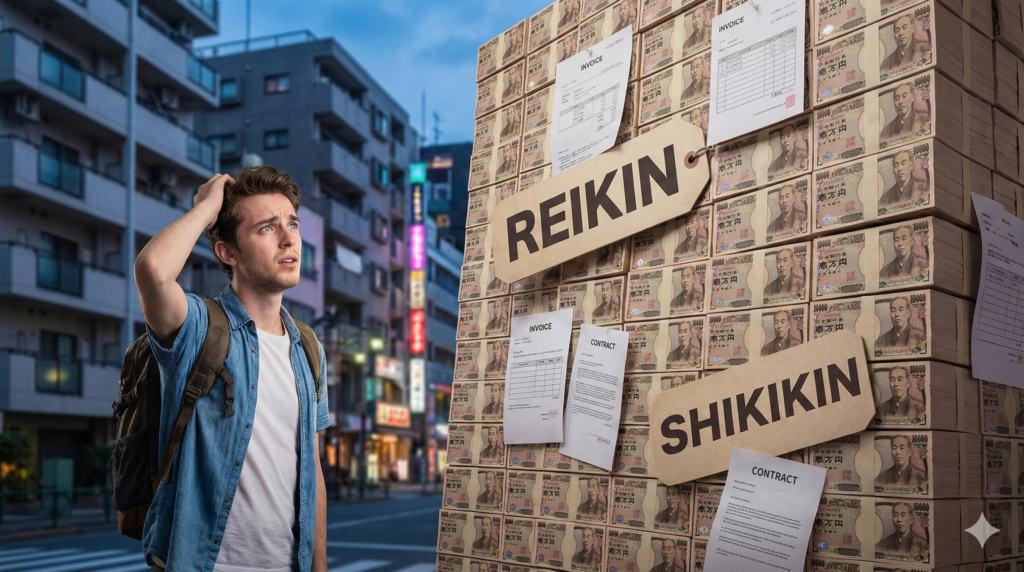
Japan’s “Black Industry” Warning: 5 Sectors Where Unpaid Overtime is the Norm (Industries where “Service Zangyo” traps foreigners.)
Have you ever heard the term “Service Zangyo” (サービス残業)?
To a newcomer in Japan, it sounds polite. “Service” usually means something free or extra given to a customer, right? Wrong. In the Japanese workplace, “Service Zangyo” means Unpaid Overtime. It is the act of working hours you are not paid for. It is illegal, yet it remains a deeply rooted “tradition” in many Japanese companies.
Many foreigners come to Japan with dreams of working in “Cool Japan” industries or experiencing “Omotenashi” (Hospitality). However, without knowing the data, many end up in “Black Companies” (Black Kigyo)—companies that exploit workers until they burn out.
Based on data regarding labor violations and average working hours, here are the 5 Most Dangerous Industries for unpaid overtime that foreigners should approach with extreme caution.
1. Food Service & Restaurants (Izakaya)
The Risk Level: ★★★★★
This is the easiest industry for foreigners to enter, but often the hardest to survive.

- The Trap: “We will sponsor your visa immediately! Free meals included! Fast promotion to Manager!” It sounds perfect for someone just starting their life in Japan.
- The Reality: The “Name-Only Manager” (Nazuke Manager) Japanese labor law has a loophole: “Managers” are exempt from overtime pay. Many Black Companies will promote you to “Store Manager” after just 6 months. The result? You still cook, clean, and serve tables for 12 hours a day, but because you have the title of “Manager,” the company legally stops paying you overtime. You might work 300 hours a month for a fixed salary that is effectively below minimum wage.
- 💡 Smart Alternative: International Hotel Chains or Corporate Cafeterias. These environments usually have stricter compliance teams and follow labor laws more closely than private Izakaya chains.
2. Hospitality (Hotels & Ryokan)
The Risk Level: ★★★★☆
Japan is famous for its hospitality, but the workers pay the price.
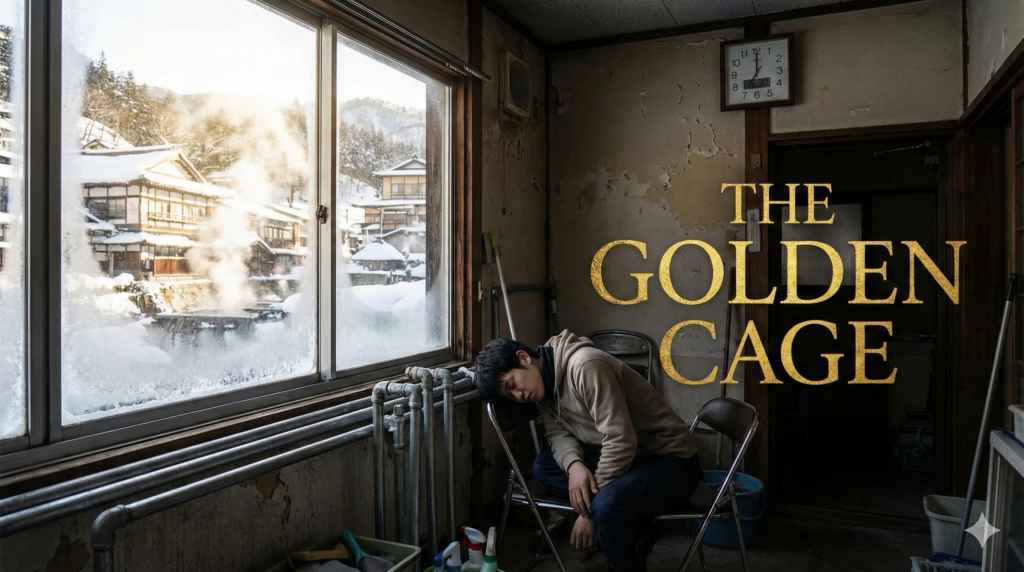
- The Trap: “Live in a beautiful resort area! Experience traditional Japanese culture.”
- The Reality: The “Split Shift” Nightmare (Nakanuki) In the hotel industry, shifts are often split to cover breakfast and dinner. Typical Schedule: Work 6:00 AM – 10:00 AM. Break 10:00 AM – 3:00 PM. Work 3:00 PM – 10:00 PM. The Problem: You are technically on a “break” for 5 hours in the middle of the day, so you are not paid. But if the hotel is in the mountains, you can’t go anywhere. You are effectively bound to the workplace for 16 hours a day while only being paid for 8.
- 💡 Smart Alternative: City Business Hotels or Front Desk roles in Tokyo/Osaka. These usually operate on a clear 3-shift system (Morning/Afternoon/Night) with straight hours, allowing you to actually have a life after work.
3. Education (English Teaching / Eikaiwa)
The Risk Level: ★★★★☆
For many, this is the gateway to Japan. But “Teaching” and “Working” are calculated differently here.
- The Trap: “Earn ¥2,500 per class! Fun and easy work!”
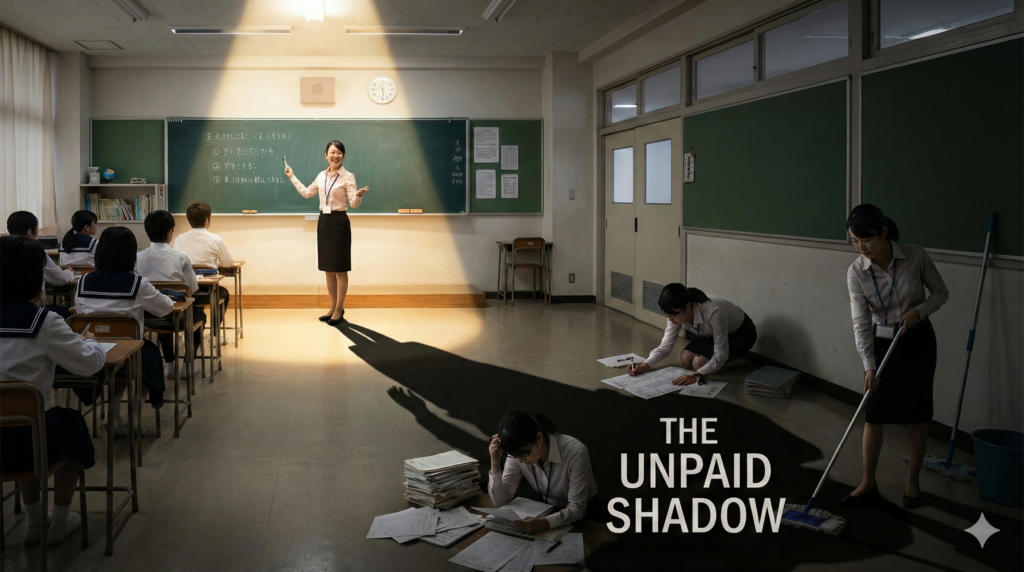
- The Reality: Unpaid “Prep Time” Many schools pay you only for the 40 or 50 minutes you are teaching. However, they require you to:
- Arrive 30 minutes early to clean and prepare (Unpaid).
- Stay 30 minutes late to write student reports (Unpaid).
- Attend weekend events (Often Unpaid or “Voluntary”). If you calculate your salary by the actual time you spend at the school, your hourly wage drops significantly.
- 💡 Smart Alternative: Direct Hire (Board of Education) or University positions. Unlike private Eikaiwa, these contracts usually pay a monthly salary that covers your time at the desk, not just your time on the podium.
4. Real Estate
The Risk Level: ★★★☆☆
High risk, high return. But do you value money over time?

- The Trap: “High commissions! Make ¥10 million a year!”
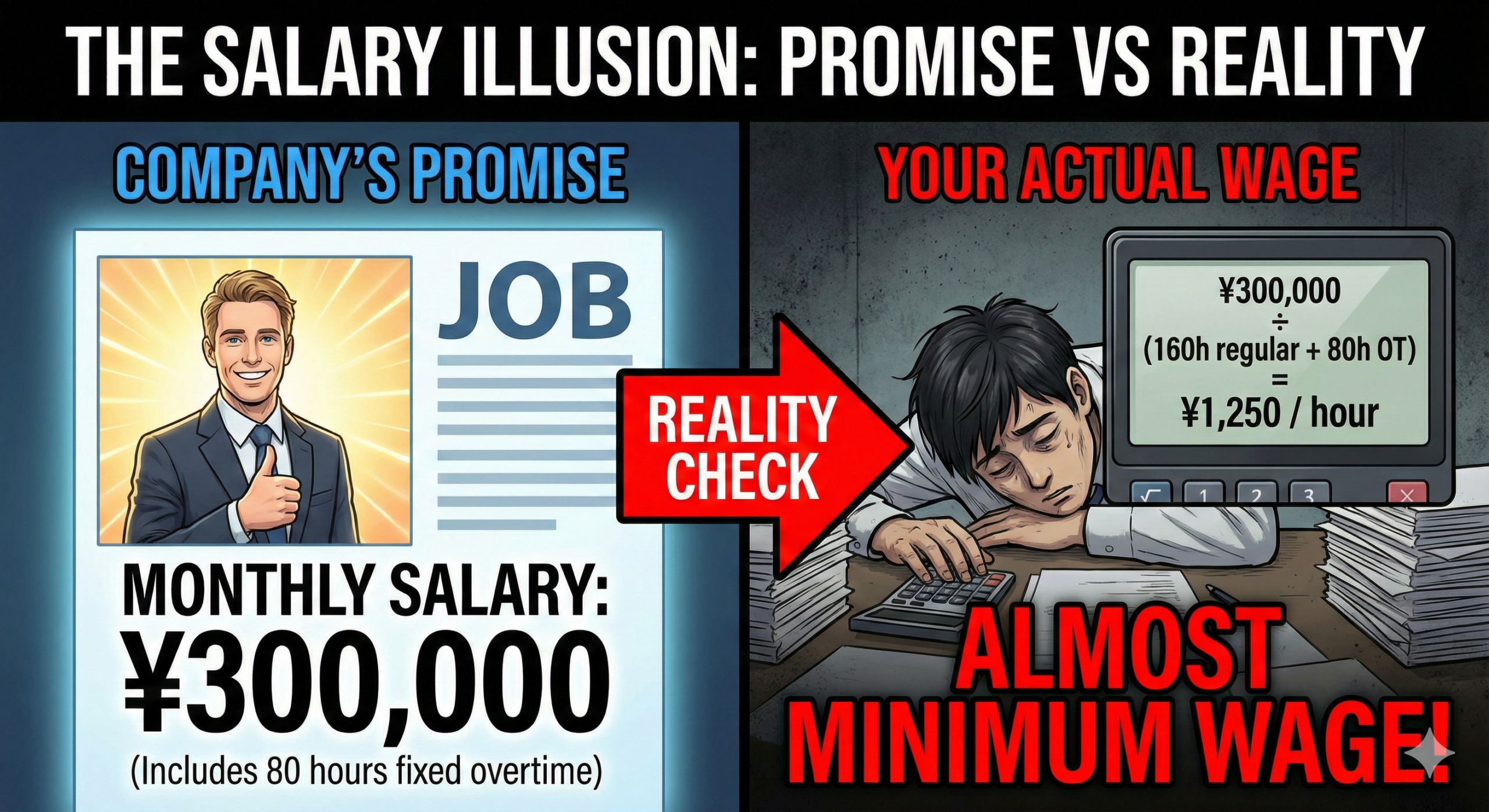
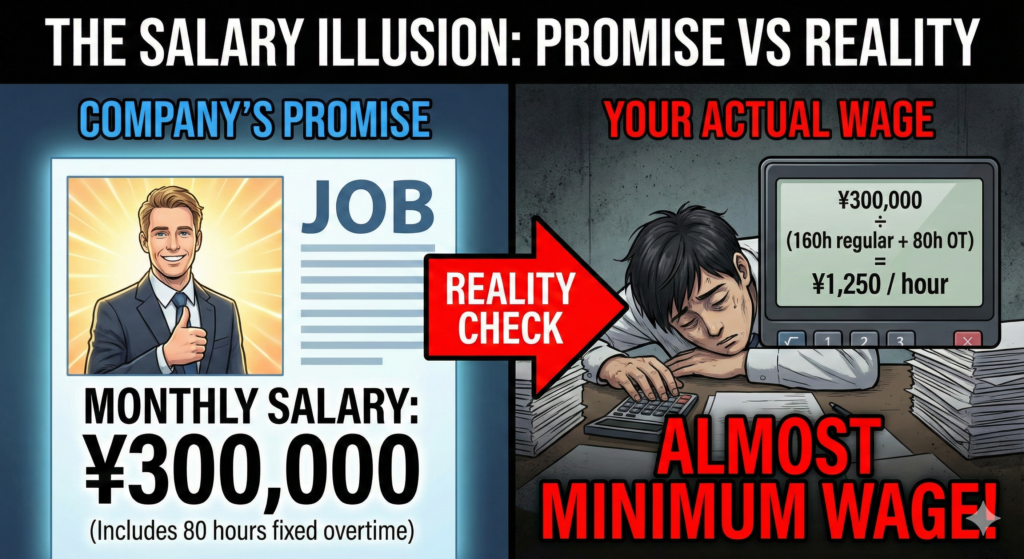
- The Reality: No Days Off The Real Estate industry is notorious for high pressure. Even on your days off (usually Tuesdays or Wednesdays), clients will call your personal phone. If you don’t answer, you lose the commission. Furthermore, many companies use “Minashi Zangyo” (Fixed Overtime Pay). Your contract says your salary is ¥300,000, but the fine print says “Includes 80 hours of overtime.” This means you must work 80 hours of overtime before you get a single extra yen.
- 💡 Smart Alternative: Property Management (PM) or Back Office. Sales roles are brutal, but managing existing buildings (PM) offers a much more stable schedule with similar industry knowledge.
5. Creative & Anime Industry
The Risk Level: ★★★★★
The “Cool Japan” dream often turns into a nightmare.

- The Trap: “Work on the anime you love! Be part of the magic.”
- The Reality: The “Passion Tax” (Yari-gai Sakushu) Companies know you love the work, so they exploit that passion. Animators in Japan are some of the lowest-paid skilled workers in the developed world. It is common to work as a “freelance contractor” (Gyomu Itaku) inside the studio, earning as little as ¥200 per drawing, resulting in a monthly income of less than ¥100,000 despite working 14 hours a day.
- 💡 Smart Alternative: Foreign Tech/Game Studios in Japan or Established IT companies. If you have creative skills, apply them in the IT or Web sector where salaries are competitive, then do anime art as a paid hobby on the side.
How to Protect Yourself
Japan is an amazing place to live, but you must read the fine print. Before signing any contract, look for these Red Flags:
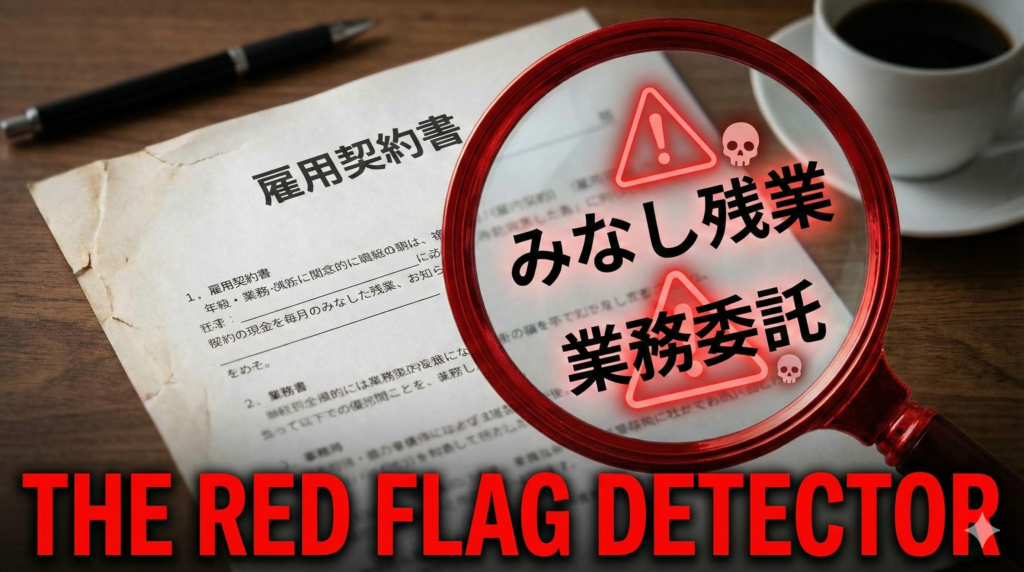
- “Fixed Overtime” (Minashi Zangyo): Does the salary include 40+ hours of overtime? If yes, expect to work those hours.
- “Gyomu Itaku” (Subcontracting): Are they hiring you as an employee or a freelancer? Freelancers get zero overtime pay, no insurance, and no visa support.
- Calculate Your Real Wage: Take the monthly salary and divide it by the actual hours you will be at the office (including prep time). Is it above the minimum wage (approx. ¥1,163 in Tokyo)?
Don’t let the “Hard Work Culture” excuse wage theft. Knowing the reality is the first step to a successful life in Japan.
What to do next?
- Check the “Black Kigyo” List: The Ministry of Health, Labour and Welfare publishes a list of companies that have violated labor laws.
- Consult a Professional: If you are already in a trap, contact the General Union or the Labor Standards Inspection Office.