Kyoto’s “Polite” Trap: When a Smile Means “Get Out”
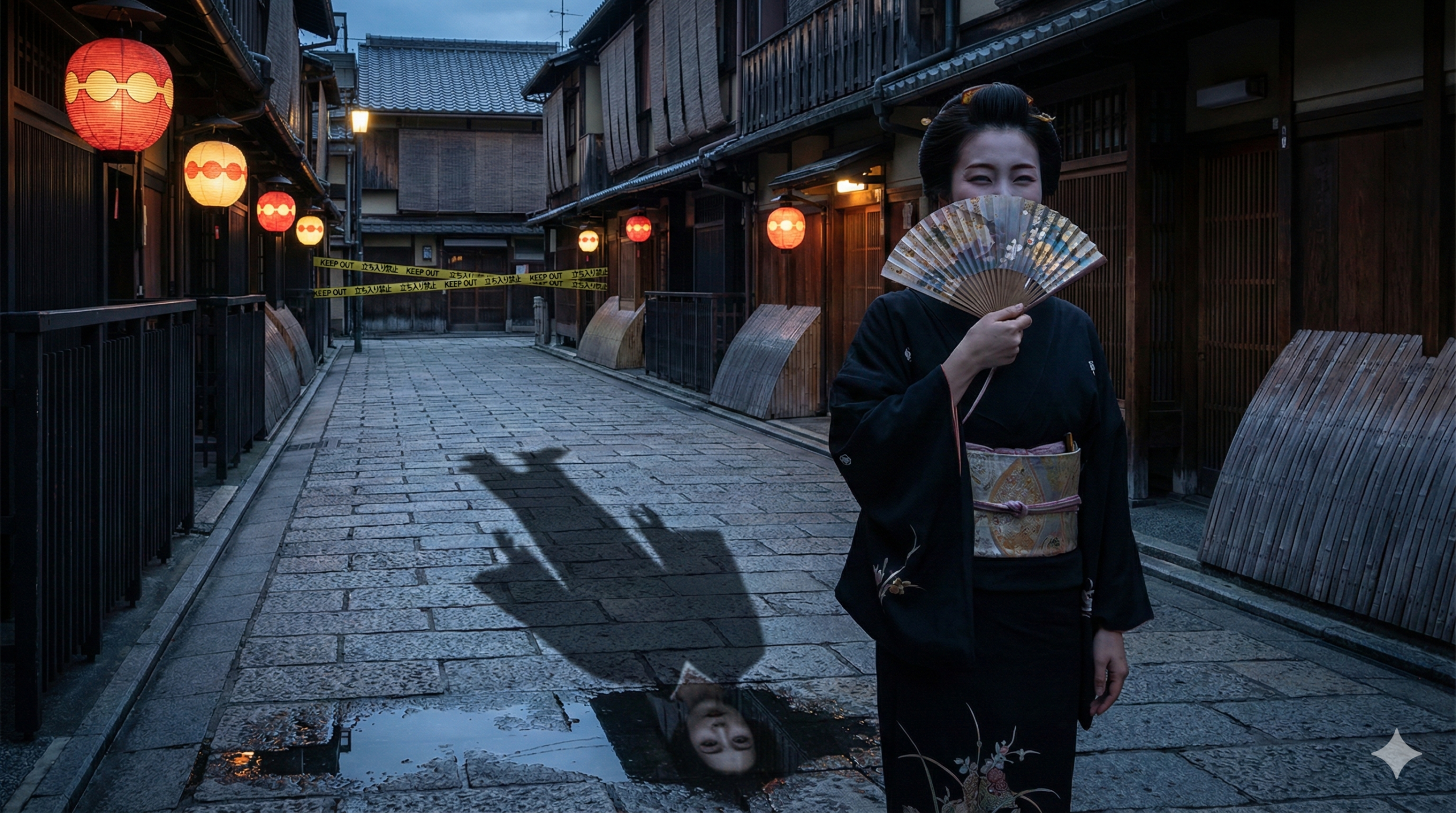
Have you ever dreamed of living in Kyoto? It is the Japan of your imagination: Geisha walking down cobbled streets, ancient temples at sunset, and the world-famous “Omotenashi” (hospitality).
It sounds like a fairytale. But here is the Reality of Japan: If you move to Kyoto expecting open arms and honest communication, you might end up isolated, confused, and stressed.
Kyoto people are famous among Japanese for being “difficult.” They have a unique culture called “Ikezu” (wicked/mean) hidden behind layers of extreme politeness. Before you sign a lease in the ancient capital, you need to understand the difference between a compliment and a command to leave.
Part 1: The “Compliment” Trap (How to Decode Kyoto Speak)
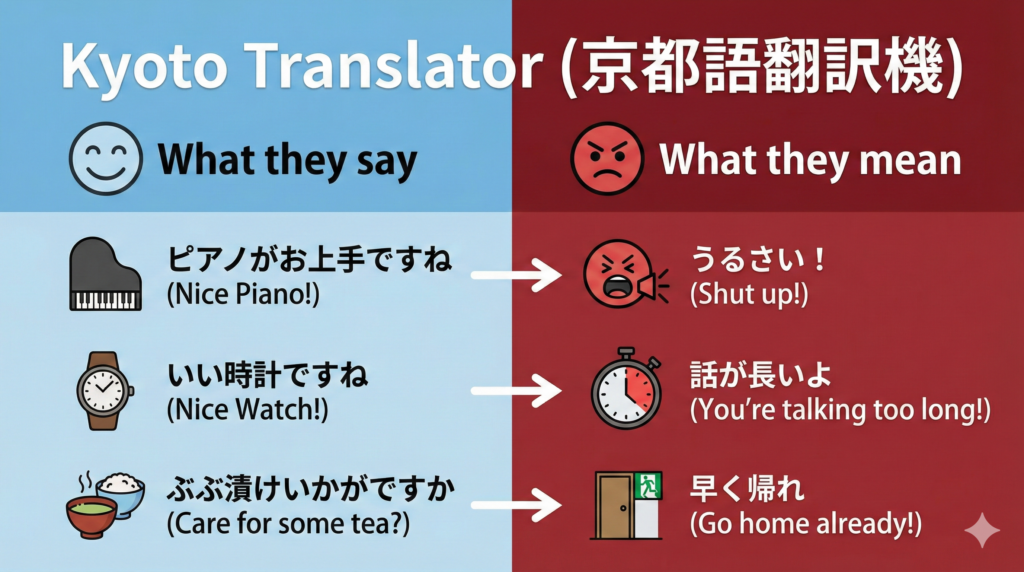
In Tokyo or Osaka, if someone says, “You play the piano well,” they mean you are good at music. In Kyoto, this is a Trap.
Kyoto communication relies heavily on Tatemae (social façade) to an artistic, almost scary degree. They prioritize maintaining “harmony” (Wa) over honesty. They will never say “No” or “Stop” directly. Instead, they use “Compliments” to signal their anger.
Here are three famous examples of “Kyoto Speak” you must know to survive:
1. “Your daughter plays the piano so well!”
- What you hear: “Your daughter is talented! Keep practicing!”
- The Reality (Translation): “Your daughter is too loud. I can hear her through the walls. If she doesn’t stop right now, I’m calling the police.”
- Correct Reaction: Apologize immediately and stop playing.
2. “You are wearing a very nice watch.”
- What you hear: “I like your fashion style.”
- The Reality (Translation): “Look at the time. You have stayed too long. Go home now.“
- Correct Reaction: “Oh my, look at the time! I must be going.”
3. The Legend of “Bubuzuke” (Tea over Rice)
There is a famous urban legend in Japan. If you visit a house in Kyoto and the host asks, “Would you like some Bubuzuke (Ochazuke)?”
- The Trap: Thinking they are offering you food because they want you to stay.
- The Reality: It means the conversation is over. If you say “Yes,” you have committed a grave social sin.
- Correct Reaction: “No thank you, I was just leaving.”
While young people in Kyoto might not offer Bubuzuke literally anymore, the mindset remains. If you cannot “Read the Air” (Kuuki wo Yomu) at a Ph.D. level, living in Kyoto will be a minefield of social errors.
Part 2: The “Ichigen-san” Wall (Exclusion in Daily Life)
The cultural barrier isn’t just about language; it’s about access.
The “No First-Timers” Rule
You find a beautiful, traditional restaurant. The lights are on, and there are empty seats visible. You walk in, but the staff crosses their arms and says, “Full.” This is “Ichigen-san Okotowari” (No first-time customers allowed).
In historic Kyoto districts, trust is currency. Unless a regular customer formally introduces you to the owner, you cannot enter. It isn’t necessarily racism (they refuse Japanese people from Tokyo, too), but for a foreign resident, it feels like rejection.
The Neighborhood Association (Chonaikai) Nightmare
Living in a traditional Machiya (townhouse) sounds romantic. The Reality: The local community rules are strict.
- You must wake up early for community cleaning duties.
- Garbage separation rules are enforced by neighborhood patrols.
- If you miss a community event, you might be ostracized. Unlike the anonymity of Tokyo, Kyoto requires intense participation in a community that may never fully accept you as an “insider.”
Part 3: The Solution – Where Should You Actually Live?
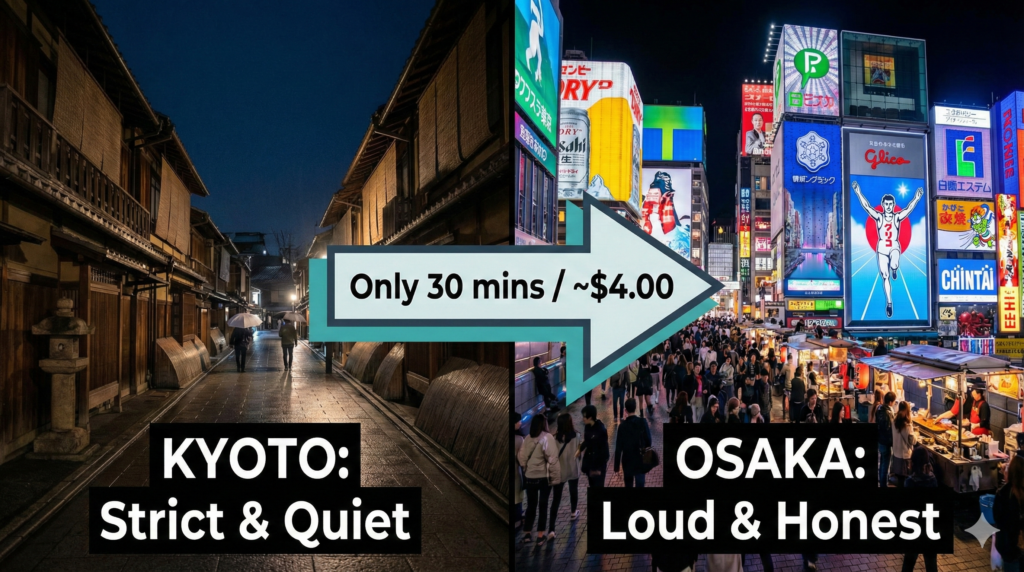
If you love the Kansai region (Western Japan) but value mental health and straightforward communication, we have a Solution. Do not live in Kyoto. Live near it.
Solution A: Osaka (The Anti-Kyoto)
Osaka is only 30 minutes by train from Kyoto ($4.00 ride), but the culture is the exact opposite.
- The Vibe: Loud, friendly, and brutally honest (Honne).
- Communication: If an Osakan dislikes you, they will tell you. If they like you, they will give you candy. There is no guessing game.
- Cost: Rent is often cheaper than central Kyoto, and rooms are larger.
- Verdict: Live in Osaka for the fun and food; visit Kyoto on weekends for the culture.
Solution B: Otsu, Shiga (The Hidden Gem)
Most foreigners overlook Shiga Prefecture.
- The Vibe: Otsu Station is only 10 minutes from Kyoto Station by JR train. It sits on the shores of Lake Biwa, Japan’s largest lake.
- Benefit: Rents are significantly lower. The people are relaxed and used to being a “bed town” for Kyoto/Osaka, so there is less “historical pride” to navigate.
- Verdict: Perfect if you want nature, quiet, and easy access to Kyoto without the “Kyoto Tax.”
Conclusion: Don’t Buy the Hype
Kyoto is arguably the most beautiful city in Japan. It is a wonderful place to take photos, eat Kaiseki cuisine, and learn history. But visiting and living are two different realities.
Unless you are ready to master the art of “reading the air” and navigating centuries-old social codes, you might find the “Polite City” to be incredibly cold.
Smart Move: Choose a home where you can be yourself. Save Kyoto for your day trips.
What to do next?
Ready to find a foreigner-friendly apartment in Osaka or the Kansai area? Avoid the “Guarantor” trap and strict landlords.
- Friendly community
- No “Key Money” or “Gift Money”
- Easy application for foreigners